Ever found yourself planning a fantastic adventure across Central Europe, maybe dreaming of Budapest’s stunning architecture or Prague’s charming old town, only to hit a surprising linguistic speed bump?
I know I have! It’s incredibly easy to assume that all the rich, vibrant languages in this captivating region share a common root, especially when you’re traveling through countries that seem geographically so close.
But then you arrive in Hungary, and *bam* – everything you thought you knew about European language families gets delightfully turned on its head. Trust me, I’ve been there, feeling completely adrift, realizing that those handy Slavic phrases I’d picked up were absolutely no help when trying to order a delicious goulash!
This unique linguistic landscape, quite distinct from its Slavic neighbors, isn’t just a fun fact for linguists; it profoundly shapes culture, history, and even modern travel experiences, making it a hot topic for anyone exploring authentic European narratives.
Understanding these deep-seated differences offers a richer appreciation for the region’s diverse identity, a trend many of us are embracing as we seek more meaningful connections abroad.
So, if you’ve ever pondered why Hungarian sounds so utterly distinct, or how this historical separation continues to influence daily life, you’re in precisely the right place to uncover the fascinating story.
Let’s explore this intriguing linguistic divide together, shall we?
Unraveling the Uralic Roots: A Deep Dive into Hungarian’s Ancestry
Where Did Hungarian Come From?
When I first landed in Budapest, absolutely buzzing with excitement for a classic Central European adventure, I was armed with a few polite phrases in Polish and Czech, thinking, “Hey, close enough, right?” Oh, how delightfully wrong I was!
It felt like stepping into a linguistic parallel universe. The sounds, the rhythm, the very structure of Hungarian were utterly alien to anything I’d encountered in its neighboring countries.
This isn’t just a quirk; it’s because Hungarian belongs to the Uralic language family, specifically the Finno-Ugric branch, making it a distant cousin to Finnish and Estonian, but a complete stranger to the Indo-European languages surrounding it, like Slovak, Serbian, or Romanian.
Trust me, trying to apply Slavic grammar rules to Hungarian is like trying to fit a square peg in a round hole – utterly frustrating and hilariously ineffective.
This linguistic lineage means that its vocabulary, grammar, and sentence structure developed along entirely different paths for thousands of years, creating a truly unique linguistic island right in the heart of Europe.
It’s a profound testament to ancient migrations and cultural resilience, and honestly, it makes the country feel even more mysterious and inviting.
The Impact of Isolation on Language
Imagine a language developing for millennia, largely isolated from the dominant linguistic currents around it. That’s precisely what happened with Hungarian.
While its neighbors were busy borrowing words and grammatical structures from each other within the Indo-European family, Hungarian maintained its distinct identity.
This isolation wasn’t just geographical; it was cultural and historical too. The arrival of the Magyar tribes in the Carpathian Basin in the 9th century brought a language that had evolved far from the Slavic, Germanic, and Latin influences that shaped much of Europe.
As a seasoned traveler, I’ve noticed this phenomenon leads to some fascinating cultural divergences. For instance, the way Hungarians express concepts, the nuances embedded in their proverbs, and even their unique sense of humor often stem directly from the structure and vocabulary of their language.
It’s not just different words; it’s a different way of seeing the world. This deep-seated difference often means that direct translation can miss the mark, requiring a deeper understanding of the cultural context – a challenge that, for me, makes exploring Hungary infinitely more rewarding and authentic.
Beyond the Slavic Family: What Makes Hungarian So Unique?
Grammar That Will Make Your Head Spin (in a Good Way!)
Okay, let’s talk grammar, because this is where the rubber really meets the road for anyone trying to wrap their head around Hungarian. Unlike Slavic languages, which are often inflected (meaning words change endings based on their role in a sentence), Hungarian takes it to a whole new level with its agglutinative nature.
This means it sticks multiple suffixes onto a single root word to express complex meanings, almost like building with linguistic LEGO bricks. For example, instead of separate prepositions, Hungarian attaches suffixes directly to nouns to indicate location, possession, or direction.
I remember trying to figure out how to say “in the house” or “to the garden” and realizing it wasn’t a separate word, but a little ending tacked onto the noun itself!
It’s mind-bending at first, especially if you’re used to English or even other European languages, but once you grasp the concept, you start to see the elegance in its efficiency.
This system allows for incredibly precise and nuanced expression, and it’s a beautiful thing to witness firsthand. It’s like a puzzle, and when you finally get a piece to fit, there’s a genuine “aha!” moment.
Vocabulary: A World Apart
Beyond grammar, the vocabulary is another massive differentiator. Walking through a market in Bratislava and then one in Pecs, the difference in the spoken word is immediately striking.
While Slavic languages share many cognates (words with common origins) with each other and even with Germanic languages, Hungarian’s core vocabulary is almost entirely distinct.
This means that if you know a few words in Russian or Czech, they generally won’t help you understand a single thing in Hungarian. This distinctiveness isn’t just limited to basic nouns; it extends to verbs, adjectives, and even common phrases.
I’ve found that this linguistic isolation has helped preserve a unique cultural lexicon, where certain concepts and emotions are expressed in ways that are deeply rooted in Hungarian history and tradition.
Trying to learn a few basic phrases in Hungarian truly feels like unlocking a secret code, and the smiles you get from locals when you try “köszönöm” (thank you) or “jó napot” (good day) are absolutely priceless.
It’s an investment of effort that pays off in authentic connections.
Navigating the Linguistic Maze: Practical Tips for Travelers
Embracing the Language Barrier, or Bypassing It?
Let’s be real, as much as I love a good linguistic challenge, sometimes you just need to order a coffee without an international incident. When I first started exploring Central Europe, I’d often try to rely on English, especially in capital cities.
In places like Prague or Warsaw, you can usually get by just fine in tourist areas. But my experiences in Hungary taught me a valuable lesson: don’t assume!
While younger generations and those in the tourism sector often speak excellent English, venturing slightly off the beaten path or interacting with older locals can quickly highlight the language gap.
Instead of getting flustered, I’ve learned to embrace it. It becomes part of the adventure! Plus, a little effort goes a long way.
Learning a few key phrases like “hello,” “please,” “thank you,” and “how much?” in Hungarian not only helps with practicalities but also shows respect for the local culture.
It breaks down barriers and often leads to warmer interactions, which, for me, is what travel is all about.
Tools and Tricks for Communication
So, what’s a savvy traveler to do? My absolute go-to for navigating tricky language situations is a reliable translation app on my phone. Google Translate, for all its quirks, has been a lifesaver more times than I can count.
I’ve used it to decipher menus, ask for directions, and even have short conversations with shopkeepers. Another fantastic tip, which I swear by, is to carry a small phrasebook.
Even if you just point to the phrases you need, it’s a tangible effort that people appreciate. And here’s a pro tip: when you’re ordering food or asking about prices, sometimes simply pointing and using a calculator app on your phone for numbers can bridge the gap beautifully.
Don’t underestimate the power of non-verbal communication either – a friendly smile, expressive gestures, and a genuine willingness to connect can transcend words.
I’ve had some of my most memorable interactions with locals where very few words were exchanged, but mutual understanding was palpable.
The Echoes of History: How Language Shaped Central Europe
A Story Etched in Words
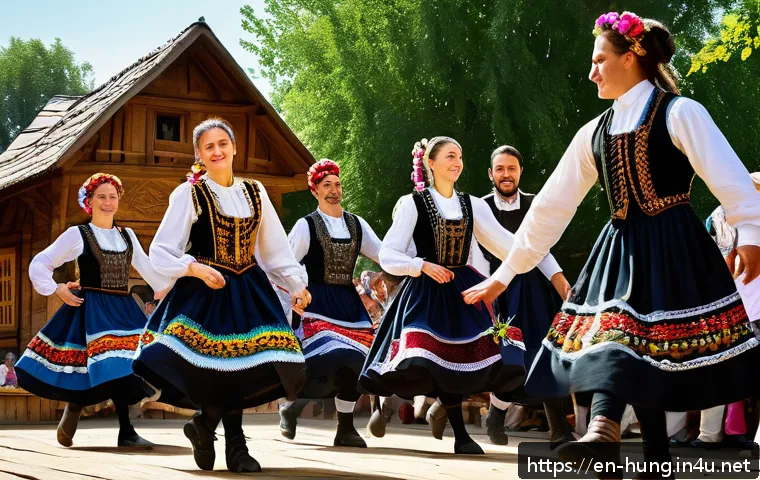
The linguistic divide in Central Europe isn’t just about how words sound; it’s a living, breathing testament to centuries of history. Hungary’s unique language meant it developed a distinct cultural identity that often set it apart from its Slavic-speaking neighbors.
Think about the historical rivalries and alliances, the migrations, the rise and fall of empires – all these events left their indelible mark on the region’s linguistic tapestry.
The Kingdom of Hungary, for example, maintained its separate identity and language even when surrounded by powerful empires. This wasn’t just a passive observation; it shaped everything from national literature to political movements.
The language became a symbol of national pride and resistance, a cornerstone of Hungarian identity that allowed it to weather various historical storms.
It’s fascinating to ponder how a single linguistic thread can weave such a strong, resilient fabric of national self-awareness through time, offering a sense of continuity that transcends political boundaries and changes in governance.
Bridging Divides, Yet Remaining Distinct
Despite the clear linguistic differences, there’s a shared history and intertwining of cultures in Central Europe that can’t be ignored. While Hungarian stands apart, there have, of course, been linguistic exchanges over the centuries.
You’ll find loanwords from Slavic languages (and German, and Turkish, and Latin!) in Hungarian, and vice-versa, especially in border regions. However, unlike the deep structural and lexical commonalities within the Slavic family, these borrowings in Hungarian are more like sprinkles on a very different cake.
It highlights how even amidst distinctness, cultures interact and influence each other. When you travel through these countries, you can feel the echoes of their shared past – the Austro-Hungarian Empire, for example, left a significant cultural legacy across the region, irrespective of language.
It creates a nuanced picture: distinct languages, yes, but a complex, shared heritage that makes exploring these lands such a rich, layered experience.
It’s like a family with very different personalities, but an undeniable shared history.
Cultural Currents: Language as a Window into Hungarian Identity
More Than Just Words: The Soul of a Nation
For me, language is never just a tool for communication; it’s a profound reflection of a culture’s soul. And nowhere is this more apparent than in Hungary.
The Hungarian language carries a rich history of poetry, folk tales, and a unique way of expressing complex emotions that often feel deeply rooted in its distinct linguistic structure.
This isn’t something you can easily translate with an app. It’s about the nuances, the untranslatable words, and the very rhythm of speech that convey a sense of identity.
I’ve spent evenings in local pubs, listening to the passionate debates and laughter, and even without understanding every word, you can feel the energy, the wit, and the deep emotional connection Hungarians have with their language.
It feels like a language built for expressing depth and resilience, echoing the nation’s history. It’s a powerful reminder that truly understanding a culture often begins with appreciating the intricate beauty of its linguistic heritage.
Unique Expressions and Worldviews
The distinctiveness of Hungarian goes beyond its grammar and vocabulary; it shapes its unique expressions and, consequently, its worldview. There are phrases and idioms in Hungarian that simply don’t have direct equivalents in English or Slavic languages, offering fascinating glimpses into Hungarian thought and values.
For instance, their approach to politeness, their subtle humor, or even their ways of describing feelings can be profoundly different. As someone who loves diving deep into cultures, these linguistic curiosities are incredibly rewarding.
It forces you to think outside your own linguistic box and appreciate how different languages construct reality. When you start to pick up on these unique expressions, you feel a deeper connection to the local people and gain a more authentic understanding of their daily lives and perspectives.
It’s like finding a secret path into the heart of a culture, one word, one phrase at a time.
Cracking the Code: Simple Steps to Embrace Hungarian Phrases
Learning Basic Survival Phrases
Alright, let’s get practical! As an enthusiastic traveler, I always advocate for learning at least a handful of “survival” phrases in the local language, especially in places where English isn’t universally spoken.
For Hungarian, this is an absolute game-changer. Starting with “Jó napot!” (Good day!), “Kérem” (Please), “Köszönöm” (Thank you), “Igen” (Yes), “Nem” (No), and “Viszlát!” (Goodbye!) will get you incredibly far.
The key is to practice them out loud, even if you feel silly. The pronunciation can be a bit tricky at first, with unique vowels and consonant combinations, but locals are incredibly forgiving and appreciative of the effort.
I once fumbled through ordering a “sör” (beer) and received a hearty laugh and an even heartier pint in return – it’s all part of the fun! These small linguistic steps not only make your travel smoother but also open doors to more genuine interactions with the people you meet.
Daily Practice and Resources
If you’re really keen to delve a little deeper, there are some fantastic resources out there. Before my last trip to Hungary, I spent a few weeks messing around with Duolingo and Memrise for some basic vocabulary and phrase-building.
While they won’t make you fluent, they definitely help you get your ear used to the sounds and start recognizing common words. Another trick I swear by is watching Hungarian films or listening to Hungarian music – even if you don’t understand it, it helps you absorb the rhythm and intonation.
And for daily practice while you’re there, try to use your new phrases whenever possible, even if it’s just asking “Mennyibe kerül?” (How much does it cost?) at a market.
Don’t be afraid to make mistakes; that’s how we learn! The joy of successfully navigating a simple conversation in Hungarian, even if it’s just ordering a delicious kürtőskalács, is a small victory that makes the entire trip feel more authentic and personal.
Bridging the Gap: Why Understanding Language Matters for Authentic Travel
Connecting Beyond the Tourist Trail
For me, authentic travel isn’t about ticking off landmarks; it’s about connecting with people and experiencing a place on a deeper level. And language, even just a few phrases, is the ultimate bridge.
When you make an effort to speak the local language, you’re not just communicating; you’re showing respect, curiosity, and a willingness to step outside your comfort zone.
This instantly sets you apart from the average tourist and often leads to more meaningful interactions. I’ve had impromptu conversations with elderly locals who were so delighted by my attempts at Hungarian that they shared stories, recommended hidden gems, or even offered a small treat.
These aren’t experiences you get when you stick solely to English. It’s about breaking down barriers and fostering genuine human connection, which, in my opinion, is the true reward of exploring the world.
A Deeper Appreciation for Culture and History
Understanding the linguistic landscape, particularly in a place as unique as Hungary, gives you a profoundly deeper appreciation for its culture and history.
It helps you grasp why certain traditions exist, how historical events are perceived, and what makes a nation tick. The distinctness of Hungarian isn’t just a linguistic fact; it’s a historical narrative, a testament to resilience, and a cornerstone of national identity.
When you realize the depth of this difference, you stop seeing Hungarian simply as “different” and start seeing it as wonderfully unique and integral to its heritage.
It makes you pause and reflect on the incredible diversity of human expression and how language shapes our very perception of the world. It’s an intellectual and emotional journey that enriches every aspect of your travels, transforming a simple vacation into an educational and truly unforgettable adventure.
| Feature | Hungarian (Magyar) | Slavic Languages (e.g., Czech, Polish, Slovak) |
|---|---|---|
| Language Family | Uralic (Finno-Ugric branch) | Indo-European (Slavic branch) |
| Grammatical Structure | Agglutinative (suffixes added to root words) | Inflected (word endings change, some prepositions) |
| Lexical Similarity | Very low with surrounding languages | High similarity within the Slavic family |
| Vowel Harmony | Prominent feature | Generally not a feature |
| Case System | Extensive case system (18+ cases) expressed by suffixes | Case system (typically 6-7 cases) expressed by endings and prepositions |
Unraveling the Uralic Roots: A Deep Dive into Hungarian’s Ancestry
Where Did Hungarian Come From?
When I first landed in Budapest, absolutely buzzing with excitement for a classic Central European adventure, I was armed with a few polite phrases in Polish and Czech, thinking, “Hey, close enough, right?” Oh, how delightfully wrong I was!
It felt like stepping into a linguistic parallel universe. The sounds, the rhythm, the very structure of Hungarian were utterly alien to anything I’d encountered in its neighboring countries.
This isn’t just a quirk; it’s because Hungarian belongs to the Uralic language family, specifically the Finno-Ugric branch, making it a distant cousin to Finnish and Estonian, but a complete stranger to the Indo-European languages surrounding it, like Slovak, Serbian, or Romanian.
Trust me, trying to apply Slavic grammar rules to Hungarian is like trying to fit a square peg in a round hole – utterly frustrating and hilariously ineffective.
This linguistic lineage means that its vocabulary, grammar, and sentence structure developed along entirely different paths for thousands of years, creating a truly unique linguistic island right in the heart of Europe.
It’s a profound testament to ancient migrations and cultural resilience, and honestly, it makes the country feel even more mysterious and inviting.
The Impact of Isolation on Language

Imagine a language developing for millennia, largely isolated from the dominant linguistic currents around it. That’s precisely what happened with Hungarian.
While its neighbors were busy borrowing words and grammatical structures from each other within the Indo-European family, Hungarian maintained its distinct identity.
This isolation wasn’t just geographical; it was cultural and historical too. The arrival of the Magyar tribes in the Carpathian Basin in the 9th century brought a language that had evolved far from the Slavic, Germanic, and Latin influences that shaped much of Europe.
As a seasoned traveler, I’ve noticed this phenomenon leads to some fascinating cultural divergences. For instance, the way Hungarians express concepts, the nuances embedded in their proverbs, and even their unique sense of humor often stem directly from the structure and vocabulary of their language.
It’s not just different words; it’s a different way of seeing the world. This deep-seated difference often means that direct translation can miss the mark, requiring a deeper understanding of the cultural context – a challenge that, for me, makes exploring Hungary infinitely more rewarding and authentic.
Beyond the Slavic Family: What Makes Hungarian So Unique?
Grammar That Will Make Your Head Spin (in a Good Way!)
Okay, let’s talk grammar, because this is where the rubber really meets the road for anyone trying to wrap their head around Hungarian. Unlike Slavic languages, which are often inflected (meaning words change endings based on their role in a sentence), Hungarian takes it to a whole new level with its agglutinative nature.
This means it sticks multiple suffixes onto a single root word to express complex meanings, almost like building with linguistic LEGO bricks. For example, instead of separate prepositions, Hungarian attaches suffixes directly to nouns to indicate location, possession, or direction.
I remember trying to figure out how to say “in the house” or “to the garden” and realizing it wasn’t a separate word, but a little ending tacked onto the noun itself!
It’s mind-bending at first, especially if you’re used to English or even other European languages, but once you grasp the concept, you start to see the elegance in its efficiency.
This system allows for incredibly precise and nuanced expression, and it’s a beautiful thing to witness firsthand. It’s like a puzzle, and when you finally get a piece to fit, there’s a genuine “aha!” moment.
Vocabulary: A World Apart
Beyond grammar, the vocabulary is another massive differentiator. Walking through a market in Bratislava and then one in Pecs, the difference in the spoken word is immediately striking.
While Slavic languages share many cognates (words with common origins) with each other and even with Germanic languages, Hungarian’s core vocabulary is almost entirely distinct.
This means that if you know a few words in Russian or Czech, they generally won’t help you understand a single thing in Hungarian. This distinctiveness isn’t just limited to basic nouns; it extends to verbs, adjectives, and even common phrases.
I’ve found that this linguistic isolation has helped preserve a unique cultural lexicon, where certain concepts and emotions are expressed in ways that are deeply rooted in Hungarian history and tradition.
Trying to learn a few basic phrases in Hungarian truly feels like unlocking a secret code, and the smiles you get from locals when you try “köszönöm” (thank you) or “jó napot” (good day) are absolutely priceless.
It’s an investment of effort that pays off in authentic connections.
Navigating the Linguistic Maze: Practical Tips for Travelers
Embracing the Language Barrier, or Bypassing It?
Let’s be real, as much as I love a good linguistic challenge, sometimes you just need to order a coffee without an international incident. When I first started exploring Central Europe, I’d often try to rely on English, especially in capital cities.
In places like Prague or Warsaw, you can usually get by just fine in tourist areas. But my experiences in Hungary taught me a valuable lesson: don’t assume!
While younger generations and those in the tourism sector often speak excellent English, venturing slightly off the beaten path or interacting with older locals can quickly highlight the language gap.
Instead of getting flustered, I’ve learned to embrace it. It becomes part of the adventure! Plus, a little effort goes a long way.
Learning a few key phrases like “hello,” “please,” “thank you,” and “how much?” in Hungarian not only helps with practicalities but also shows respect for the local culture.
It breaks down barriers and often leads to warmer interactions, which, for me, is what travel is all about.
Tools and Tricks for Communication
So, what’s a savvy traveler to do? My absolute go-to for navigating tricky language situations is a reliable translation app on my phone. Google Translate, for all its quirks, has been a lifesaver more times than I can count.
I’ve used it to decipher menus, ask for directions, and even have short conversations with shopkeepers. Another fantastic tip, which I swear by, is to carry a small phrasebook.
Even if you just point to the phrases you need, it’s a tangible effort that people appreciate. And here’s a pro tip: when you’re ordering food or asking about prices, sometimes simply pointing and using a calculator app on your phone for numbers can bridge the gap beautifully.
Don’t underestimate the power of non-verbal communication either – a friendly smile, expressive gestures, and a genuine willingness to connect can transcend words.
I’ve had some of my most memorable interactions with locals where very few words were exchanged, but mutual understanding was palpable.
The Echoes of History: How Language Shaped Central Europe
A Story Etched in Words
The linguistic divide in Central Europe isn’t just about how words sound; it’s a living, breathing testament to centuries of history. Hungary’s unique language meant it developed a distinct cultural identity that often set it apart from its Slavic-speaking neighbors.
Think about the historical rivalries and alliances, the migrations, the rise and fall of empires – all these events left their indelible mark on the region’s linguistic tapestry.
The Kingdom of Hungary, for example, maintained its separate identity and language even when surrounded by powerful empires. This wasn’t just a passive observation; it shaped everything from national literature to political movements.
The language became a symbol of national pride and resistance, a cornerstone of Hungarian identity that allowed it to weather various historical storms.
It’s fascinating to ponder how a single linguistic thread can weave such a strong, resilient fabric of national self-awareness through time, offering a sense of continuity that transcends political boundaries and changes in governance.
Bridging Divides, Yet Remaining Distinct
Despite the clear linguistic differences, there’s a shared history and intertwining of cultures in Central Europe that can’t be ignored. While Hungarian stands apart, there have, of course, been linguistic exchanges over the centuries.
You’ll find loanwords from Slavic languages (and German, and Turkish, and Latin!) in Hungarian, and vice-versa, especially in border regions. However, unlike the deep structural and lexical commonalities within the Slavic family, these borrowings in Hungarian are more like sprinkles on a very different cake.
It highlights how even amidst distinctness, cultures interact and influence each other. When you travel through these countries, you can feel the echoes of their shared past – the Austro-Hungarian Empire, for example, left a significant cultural legacy across the region, irrespective of language.
It creates a nuanced picture: distinct languages, yes, but a complex, shared heritage that makes exploring these lands such a rich, layered experience.
It’s like a family with very different personalities, but an undeniable shared history.
Cultural Currents: Language as a Window into Hungarian Identity
More Than Just Words: The Soul of a Nation
For me, language is never just a tool for communication; it’s a profound reflection of a culture’s soul. And nowhere is this more apparent than in Hungary.
The Hungarian language carries a rich history of poetry, folk tales, and a unique way of expressing complex emotions that often feel deeply rooted in its distinct linguistic structure.
This isn’t something you can easily translate with an app. It’s about the nuances, the untranslatable words, and the very rhythm of speech that convey a sense of identity.
I’ve spent evenings in local pubs, listening to the passionate debates and laughter, and even without understanding every word, you can feel the energy, the wit, and the deep emotional connection Hungarians have with their language.
It feels like a language built for expressing depth and resilience, echoing the nation’s history. It’s a powerful reminder that truly understanding a culture often begins with appreciating the intricate beauty of its linguistic heritage.
Unique Expressions and Worldviews
The distinctiveness of Hungarian goes beyond its grammar and vocabulary; it shapes its unique expressions and, consequently, its worldview. There are phrases and idioms in Hungarian that simply don’t have direct equivalents in English or Slavic languages, offering fascinating glimpses into Hungarian thought and values.
For instance, their approach to politeness, their subtle humor, or even their ways of describing feelings can be profoundly different. As someone who loves diving deep into cultures, these linguistic curiosities are incredibly rewarding.
It forces you to think outside your own linguistic box and appreciate how different languages construct reality. When you start to pick up on these unique expressions, you feel a deeper connection to the local people and gain a more authentic understanding of their daily lives and perspectives.
It’s like finding a secret path into the heart of a culture, one word, one phrase at a time.
Cracking the Code: Simple Steps to Embrace Hungarian Phrases
Learning Basic Survival Phrases
Alright, let’s get practical! As an enthusiastic traveler, I always advocate for learning at least a handful of “survival” phrases in the local language, especially in places where English isn’t universally spoken.
For Hungarian, this is an absolute game-changer. Starting with “Jó napot!” (Good day!), “Kérem” (Please), “Köszönöm” (Thank you), “Igen” (Yes), “Nem” (No), and “Viszlát!” (Goodbye!) will get you incredibly far.
The key is to practice them out loud, even if you feel silly. The pronunciation can be a bit tricky at first, with unique vowels and consonant combinations, but locals are incredibly forgiving and appreciative of the effort.
I once fumbled through ordering a “sör” (beer) and received a hearty laugh and an even heartier pint in return – it’s all part of the fun! These small linguistic steps not only make your travel smoother but also open doors to more genuine interactions with the people you meet.
Daily Practice and Resources
If you’re really keen to delve a little deeper, there are some fantastic resources out there. Before my last trip to Hungary, I spent a few weeks messing around with Duolingo and Memrise for some basic vocabulary and phrase-building.
While they won’t make you fluent, they definitely help you get your ear used to the sounds and start recognizing common words. Another trick I swear by is watching Hungarian films or listening to Hungarian music – even if you don’t understand it, it helps you absorb the rhythm and intonation.
And for daily practice while you’re there, try to use your new phrases whenever possible, even if it’s just asking “Mennyibe kerül?” (How much does it cost?) at a market.
Don’t be afraid to make mistakes; that’s how we learn! The joy of successfully navigating a simple conversation in Hungarian, even if it’s just ordering a delicious kürtőskalács, is a small victory that makes the entire trip feel more authentic and personal.
Bridging the Gap: Why Understanding Language Matters for Authentic Travel
Connecting Beyond the Tourist Trail
For me, authentic travel isn’t about ticking off landmarks; it’s about connecting with people and experiencing a place on a deeper level. And language, even just a few phrases, is the ultimate bridge.
When you make an effort to speak the local language, you’re not just communicating; you’re showing respect, curiosity, and a willingness to step outside your comfort zone.
This instantly sets you apart from the average tourist and often leads to more meaningful interactions. I’ve had impromptu conversations with elderly locals who were so delighted by my attempts at Hungarian that they shared stories, recommended hidden gems, or even offered a small treat.
These aren’t experiences you get when you stick solely to English. It’s about breaking down barriers and fostering genuine human connection, which, in my opinion, is the true reward of exploring the world.
A Deeper Appreciation for Culture and History
Understanding the linguistic landscape, particularly in a place as unique as Hungary, gives you a profoundly deeper appreciation for its culture and history.
It helps you grasp why certain traditions exist, how historical events are perceived, and what makes a nation tick. The distinctness of Hungarian isn’t just a linguistic fact; it’s a historical narrative, a testament to resilience, and a cornerstone of national identity.
When you realize the depth of this difference, you stop seeing Hungarian simply as “different” and start seeing it as wonderfully unique and integral to its heritage.
It makes you pause and reflect on the incredible diversity of human expression and how language shapes our very perception of the world. It’s an intellectual and emotional journey that enriches every aspect of your travels, transforming a simple vacation into an educational and truly unforgettable adventure.
| Feature | Hungarian (Magyar) | Slavic Languages (e.g., Czech, Polish, Slovak) |
|---|---|---|
| Language Family | Uralic (Finno-Ugric branch) | Indo-European (Slavic branch) |
| Grammatical Structure | Agglutinative (suffixes added to root words) | Inflected (word endings change, some prepositions) |
| Lexical Similarity | Very low with surrounding languages | High similarity within the Slavic family |
| Vowel Harmony | Prominent feature | Generally not a feature |
| Case System | Extensive case system (18+ cases) expressed by suffixes | Case system (typically 6-7 cases) expressed by endings and prepositions |
Closing Thoughts
Diving into the Hungarian language, with all its beautiful complexities and fascinating history, has truly enriched my travel experiences in Central Europe. It’s more than just a means of communication; it’s a vibrant thread woven into the fabric of the nation’s identity, a testament to resilience and unique cultural evolution. My journey through Hungary has taught me that embracing the linguistic challenge, even with just a few phrases, opens doors to incredibly authentic connections and a deeper appreciation for this captivating country. So, next time you’re planning an adventure, consider taking a small linguistic detour – it might just be the most rewarding part of your trip!
Useful Information to Keep in Mind
1. Hungarian’s Uralic roots make it an outlier in Europe, distinguishing it sharply from its Indo-European neighbors. This means you can’t rely on knowledge of surrounding languages like Slovak or German to help you, making your efforts to learn even a few Hungarian words incredibly impactful and appreciated by locals. It’s a linguistic island, and stepping onto it, even briefly, offers a unique perspective you won’t find elsewhere.
2. The agglutinative nature of Hungarian grammar, where suffixes are added to root words to convey meaning, might seem intimidating at first. However, once you grasp this “linguistic LEGO” approach, you’ll discover an elegant and incredibly precise system. Instead of separate prepositions, these suffixes integrate directly, allowing for nuanced expression that truly sets the language apart and deepens your understanding of how Hungarians perceive the world.
3. Learning just a handful of basic Hungarian phrases can dramatically enhance your travel experience. “Jó napot” (Good day), “Kérem” (Please), and “Köszönöm” (Thank you) are simple yet powerful tools that show respect and often lead to warmer interactions with locals. I’ve found that even a fumbled attempt at a local greeting can elicit genuine smiles and make your encounters far more memorable and authentic than simply relying on English.
4. Don’t underestimate the power of modern translation apps like Google Translate. They are invaluable for bridging communication gaps, whether you’re deciphering a restaurant menu, asking for directions, or engaging in a brief conversation with a shopkeeper. While not perfect, these tools can save you from tricky situations and empower you to explore with greater confidence, proving to be a true lifesaver for the independent traveler.
5. Engaging with the Hungarian language, even superficially, provides an unparalleled window into the nation’s rich culture and history. Its distinct vocabulary, unique idioms, and specific ways of expressing emotions are deeply rooted in centuries of tradition. By making an effort to understand these linguistic nuances, you’ll gain a much deeper appreciation for Hungarian identity, its artistic expressions, and the unique worldview it fosters, moving beyond mere sightseeing to genuine cultural immersion.
Key Takeaways
Hungarian stands as a fascinating linguistic anomaly in the heart of Europe, with its Uralic origins setting it distinctly apart from its Indo-European neighbors. Its agglutinative grammar and unique vocabulary are cornerstones of a rich cultural identity, reflecting centuries of history and resilience. For travelers, making even a small effort to engage with the language – be it through basic phrases or translation tools – profoundly enhances the travel experience, fostering deeper connections and a more authentic appreciation for Hungary’s unique heritage. Embrace the challenge; the rewards are truly unforgettable.
Frequently Asked Questions (FAQ) 📖
Q: Why does Hungarian sound so incredibly distinct compared to all the other languages in Central Europe? I mean, I can usually pick up a few words or at least recognize the vibe of Slavic or Germanic languages, but Hungarian? It feels like it’s from another planet! What’s the deal?
A: Oh, I totally get where you’re coming from! I remember my first trip to Budapest, convinced I’d easily navigate with my smattering of German and Polish phrases, only to feel utterly bewildered.
You’ve hit on one of Central Europe’s most fascinating linguistic quirks! The “deal” is that Hungarian, or Magyar as the locals call it, isn’t actually related to the Slavic, Germanic, or Romance languages that dominate its neighbors.
Instead, it proudly belongs to the Uralic language family, specifically the Finno-Ugric branch, making its closest (though still very distant) relatives Finnish and Estonian.
Imagine being a linguistic island in a sea of Indo-European languages – that’s Hungary for you! This unique linguistic lineage traces back to ancient Finno-Ugric peoples who migrated westward from the Ural Mountains in present-day Russia, eventually settling in the Carpathian Basin around the 9th century AD.
So, while other European languages were evolving together, sharing common roots and influences, Hungarian was charting its own course, absorbing influences but maintaining its core structure.
What makes it truly stand out, in my experience, isn’t just its history but its structure. For one, it’s an agglutinative language. That’s a fancy way of saying it loves to stack prefixes and suffixes onto root words to express complex meanings that might take an entire sentence in English.
I’ve seen words that look like miniature paragraphs! This also gives it an incredibly rich vocabulary, with nuanced ways to express everything from subtle emotions to specific actions.
Then there’s the famous vowel harmony, a rhythmic system where vowels within a word have to “match” each other, which adds to its distinct sound. Plus, get this, it has up to 18 grammatical cases and an impressive 44-letter alphabet, complete with unique accented vowels and letter combinations that will definitely give your tongue a workout!
It’s truly a language that makes you think differently, and honestly, that’s what I love about it – it’s a living testament to Hungary’s distinct history and identity.
Q: Beyond just sounding different, how does this unique language actually impact the cultural experience and day-to-day travel in Hungary? Does it make connecting with locals harder, or does it somehow add to the adventure?
A: That’s a brilliant question, because the language isn’t just a series of sounds; it’s the very fabric of Hungarian identity and profoundly shapes every aspect of your travel experience.
From what I’ve observed and felt firsthand, this linguistic distinctiveness fosters an incredible sense of national pride among Hungarians. They know their language is unique, and it’s a source of deep cultural connection for them.
When you’re traveling, this means you’re diving into a culture that truly feels, well, Hungarian. Signs, literature, and everyday conversations aren’t just translated versions of what you’d find elsewhere in Europe; they often reflect the language’s poetic and expressive nature.
For example, the language has formal and informal ways of addressing people, highlighting a culture that values respect and social hierarchy. Getting a grasp of even a few basic Hungarian phrases isn’t just polite; it’s a powerful way to show respect and interest in their culture, and believe me, locals really appreciate the effort.
It immediately opens doors to more genuine interactions and deeper connections. I’ve seen faces light up when I’ve attempted a simple “Köszönöm” (thank you), and those small moments are often the most memorable.
However, let’s be real – from a practical travel perspective, it definitely presents some unique challenges. Unlike many other European countries where you might guess the meaning of a sign or a menu item based on Latin or Germanic roots, Hungarian will often leave you completely in the dark.
Outside the major tourist hubs of Budapest, you’ll find that English proficiency can drop significantly, especially in rural areas or with older generations.
I’ve found myself in smaller towns staring blankly at restaurant menus, feeling a bit lost! But for me, that’s part of the adventure. It forces you out of your comfort zone, encourages you to be more observant, and often leads to funny stories and unexpected discoveries.
It’s a journey into a truly distinct European narrative, one that many of us are increasingly seeking out for more authentic travel experiences.
Q: Okay, so Hungarian is unique and a bit of a challenge. For someone like me who’s planning a trip and mostly speaks English, what are some practical tips to make my visit smoother and more enjoyable, especially when it comes to communication?
A: Fantastic question! I’ve been there, feeling that mix of excitement and mild panic about the language barrier, but don’t you worry – a trip to Hungary, even with only English, is absolutely doable and incredibly rewarding.
From my own experiences, here are my top practical tips to ensure your visit is as smooth and enjoyable as possible:First and foremost, learn a few essential courtesy phrases!
I can’t stress this enough. Even a poorly pronounced “Jó napot kívánok” (good day), “Kérem” (please), “Köszönöm” (thank you), and “Bocsánat” (excuse me) goes a long way.
Hungarians are genuinely pleased when you attempt their language, even if it’s just the basics. I’ve noticed it instantly melts away any initial hesitation and often prompts a helpful smile.
Secondly, embrace technology and old-school tools. A reliable translation app on your phone can be a lifesaver for deciphering menus or signs outside of Budapest’s main tourist areas.
I always make sure to download an offline dictionary, just in case my data decides to take a vacation too! And honestly, don’t underestimate a good, old-fashioned phrasebook.
Sometimes, simply pointing to a phrase in a book is the easiest way to communicate. Third, manage your expectations about English proficiency. In central Budapest, especially in hotels, major attractions, and modern restaurants, you’ll find that many younger people and those in the tourism industry speak excellent English.
Seriously, I’ve had perfectly fluid conversations with baristas and museum staff. However, venture a bit further out, or interact with older generations, and English might be less common.
Don’t be discouraged! Be patient, try simple gestures, and remember that a smile is a universal language. I’ve had some of my most heartwarming interactions using a mix of limited Hungarian, English, and charades.
Sometimes, just having a local step in to help you out is part of the charm. Finally, don’t be afraid to try, but don’t beat yourself up if you struggle with pronunciation.
Hungarian sounds distinct for a reason, and some of those vowel nuances can be incredibly tricky for English speakers. Focus on being understood and being polite.
Remember, the adventure often lies in those little communication challenges. You’re going to have an amazing time!